

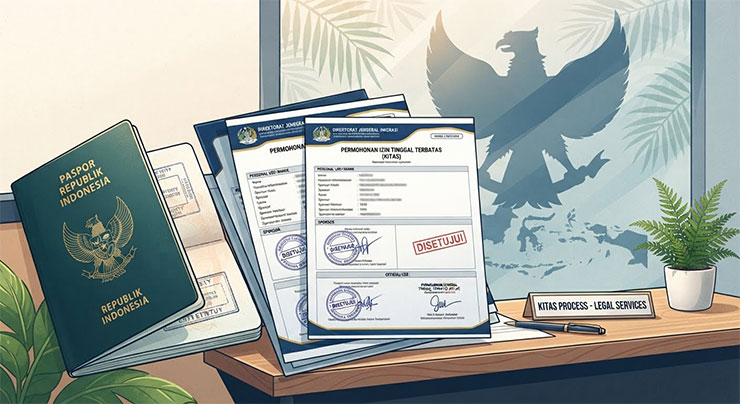
Indonesia’s immigration renewal process can become complicated for foreign residents, particularly when documents, sponsorship arrangements, or residence permits no longer match their current circumstances.
Renewing a Limited Stay Permit, commonly known as KITAS (Kartu Izin Tinggal Terbatas), is an important administrative process for foreign nationals planning to continue living in Indonesia.
While many expatriates assume that extending their KITAS is simply a matter of submitting documents and paying the required fees, the process can involve several challenges. Incomplete paperwork, changes in sponsorship, inconsistent personal information, and uncertainty about immigration requirements are among the issues that can complicate an application.
For foreigners living in Bali, where international residents make up a significant part of the local community, understanding these potential problems is particularly important.
1. Incomplete or Incorrect Documentation
One of the most common challenges during a KITAS extension is preparing the correct documentation.
Applicants may be required to provide supporting documents related to their identity, current residence permit, sponsor, and the purpose of their stay. The specific requirements depend on the type of KITAS and the applicant’s circumstances.
Problems can arise when:
- Passport information does not match previously submitted immigration records.
- Supporting documents from the sponsor are incomplete.
- Required company or family documents are outdated.
- Applicants submit documents that do not meet the applicable requirements.
Even relatively small discrepancies can lead to additional verification or requests for corrections, potentially delaying the process.
2. Problems With Sponsors and Sponsorship Changes
Another significant issue involves the sponsor responsible for supporting a foreigner’s stay in Indonesia.
Depending on the KITAS category, the sponsor may be an Indonesian spouse, an Indonesian company, or another eligible sponsoring entity.
Complications can occur when:
- A sponsoring company becomes inactive or changes its legal status.
- An employment relationship ends before the permit expires.
- A foreign resident wants to change sponsors.
- The sponsor cannot provide the necessary supporting documentation.
These situations require careful attention because a residence permit is associated with specific conditions and activities.
Foreign residents should not assume that changing sponsors is simply an administrative update. The appropriate immigration procedure depends on the existing permit and the proposed change.
3. Changes in Employment or Business Activities
Foreign nationals sometimes experience changes in their professional circumstances while living in Indonesia.
For example, an expatriate may move to another company, receive a different position, or become involved in a new business venture.
However, a KITAS is issued based on a particular immigration category and its permitted activities.
If an individual’s actual activities no longer correspond with the conditions of their residence permit, additional immigration procedures may be necessary.
This is particularly relevant for foreign investors, company directors, and employees whose professional responsibilities change during their stay.
Applicants should review their existing immigration classification before submitting a renewal application rather than assuming that their previous permit automatically covers new activities.
4. Passport Expiration and Personal Information Changes
Passport validity is another factor that can complicate KITAS renewal.
Foreign nationals who renew their passports, change personal information, or obtain new travel documents should ensure that their immigration records remain consistent.
A common concern occurs when an individual receives a new passport but has not properly addressed the relationship between the new document and their existing immigration records.
Other changes, such as residential addresses or personal circumstances, may also require attention depending on the applicable reporting obligations.
Preparing these updates before starting the renewal process can help minimize unnecessary administrative complications.
5. Delayed Applications and Expired Residence Permits
Timing is one of the most important aspects of KITAS renewal.
Some foreign residents postpone the process until their current residence permit is close to its expiration date. This can create unnecessary pressure, particularly if additional documents, sponsor verification, or other administrative procedures are required.
If an application encounters problems, the remaining time may become insufficient to resolve them comfortably.
Foreign nationals should therefore check their permit’s expiration date and confirm the applicable renewal procedure well in advance.
Staying in Indonesia beyond the authorized period is a serious immigration violation and may result in administrative sanctions.
6. Uncertainty About Immigration Fees and Procedures
Another challenge is understanding the costs and administrative steps involved in extending a KITAS.
The total cost can vary depending on the immigration category, permit duration, applicable government charges, and additional services required.
Applicants may also encounter different information from unofficial websites, social media discussions, or third-party service providers.
This can make it difficult to determine which requirements are current and which information applies to their specific situation.
Foreign residents should prioritize official immigration information and request a clear breakdown of applicable government fees and professional service charges before proceeding.
7. Choosing the Wrong Immigration Permit for Long-Term Stay
Not every foreign national living in Indonesia has the same immigration needs.
Some people stay for employment, others join Indonesian family members, while others come for investment, retirement, or tourism-related activities.
Choosing an inappropriate immigration category can create complications when the permit needs to be extended.
For example, a foreign national whose original circumstances have changed may need to evaluate whether their existing residence permit remains appropriate.
The distinction between a visit visa and a limited stay permit is also important. A visa allowing an extended visit does not automatically provide the same rights and conditions as a KITAS.
Understanding the permitted activities and limitations of each immigration category is essential before making a decision.
How Can Foreigners Avoid KITAS Renewal Problems?
Although immigration procedures can be complex, several practical steps can help foreign residents reduce the risk of delays and administrative difficulties.
- Check the expiration date early. Avoid waiting until the final days before your current permit expires.
- Prepare documents in advance. Check passport validity, sponsor documentation, and other supporting records.
- Verify your sponsorship status. Make sure your sponsor can continue fulfilling the relevant obligations.
- Review your immigration category. Confirm that your current permit remains suitable for your actual circumstances.
- Use reliable information sources. Verify requirements with the Indonesian Immigration authorities or a qualified immigration service provider.
Most importantly, applicants should understand that immigration requirements can differ depending on the type of residence permit and individual circumstances.
Getting Professional Assistance With KITAS Renewal in Bali
For foreign nationals unfamiliar with Indonesian immigration procedures, navigating the renewal process independently can be challenging.
Professional immigration assistance can help applicants understand the applicable requirements, organize supporting documents, identify potential administrative issues, and prepare their applications.
Foreign residents looking for information about kitas visa bali can explore IndonesiaVisas.id for guidance on Indonesian visa and immigration services.
KITAS renewal is more than a routine administrative requirement. It involves maintaining compliance with Indonesian immigration regulations, ensuring that personal and sponsorship documents remain accurate, and confirming that the residence permit continues to match the foreigner’s circumstances.
For expatriates living in Bali and other parts of Indonesia, early preparation and reliable immigration guidance can make a significant difference.
Understanding potential renewal problems before they arise is one of the most effective ways to maintain a lawful and uninterrupted stay in Indonesia.